
What If Change Could Beas Automatic asYour Problem?
You know how you want to be.
But the same patterns keep getting in the way.
Maybe it’s anxiety, self-doubt, a past experience that still affects you, the way you react, or something else.
It happens automatically.
Surprisingly, that means the change can be automatic too.
What do you want to change?
Start with free help, or work with me one-on-one
with a no change, no pay guarantee.
- 6M+people reached through my work
- 4M+of them have listened to Instant Calm
- 103+countries my clients come from
- 25+years working with a no change, no pay guarantee
‘No one else does, or can do, what Michael does.’
Dr Martin RussellMedical doctor · Australia
Automatic Problem.Automatic Change.
Perhaps you’ll recognise one of these patterns, or something like it:
- You know you’re safe, but your body still panics.
- You know worrying doesn’t help, but your mind keeps racing.
- You know what happened is in the past, but some part of you reacts as if it’s still happening.
- You know how good you can be, but under pressure something gets in the way.
- You know the conversation is over, but your mind keeps replaying it.
- You know you love them, but you snap at the people closest to you.
- You know what you want to do, but somehow you can’t get yourself to do it.
On the surface, these look like different problems. Underneath, they have one thing in common: they happen automatically.
If your problem happens automatically, why shouldn’t the solution?
The goal is that, in the same old situation, you’ll naturally feel and respond the way you want.
‘Michael is one of the best in the world.’
‘I’ve known Michael for over 20 years. In my view, he is one of the best. He will leave no stone unturned, no avenue unexplored, to help you move forward and feel free again.’
Dr Lewis WalkerMedical doctor · Coach to Great Britain & Scotland International Athletes · Scotland
If Knowledge Was Enough, Change Would Be Easy
You’ve thought about it.
You’ve searched for answers.
You may even have sought professional help, and understand more about why it happens.
And yet it still happens.
Each time it happens, it costs you something: time you can’t get back, things you avoid, moments you can’t fully enjoy.
Understanding a pattern and changing it are two different things.
But with the right experience, change can be easy.
‘I like that I’m not spending hundreds of hours and thousands of dollars to sit here and talk about my problems.
Sometimes [the change] is a complete light switch. Other times, it just keeps growing.
It’s wonderful to just say: “I don’t like this.” “I don’t like the way that feels.” “I prefer the way this feels.” “I wish I could do this or that”, and then we make that happen, together.’
Sara NightingaleUnited States
Automatic Change in a Try-Harder World
You can know exactly how you’d like to be. You can learn coping techniques, remind yourself what to do, and summon every ounce of willpower in an attempt to respond differently.
And while those things can help, they’re not the same as transforming the unwanted pattern itself.
That’s why even the most capable, determined people find the same old unwanted response involuntarily taking over, as soon as they’re ‘triggered’.
Trying to override an unwanted response isn’t the same as changing the response itself.
That doesn’t mean effort never has a place. For example, if avoidance has become part of the pattern, you may need to go outside your comfort zone.
But our goal is never to rely on effort to override unwanted responses.
Imagine entering the same old situation and discovering that your old reaction simply isn’t there any more. You’re simply the way you want to be, without even thinking about it.
‘I’m a mental health therapist. I’m not sure exactly what Michael did… to me, it was magical. In one session my panic attacks were gone.’
Ruth SternLicensed Therapist · EMDR-Certified Clinician · United States
The Way You Want to Be, as Automatic as the Problem Was
Automatic Change transforms unwanted patterns directly.
No endless talking. No rehashing the past. No coping techniques to remember.
Many approaches focus on coping with a pattern after it has already been set in motion.
Automatic Change transforms the response itself, so it can stop happening in the first place.
And when we transform unwanted responses, there’s nothing left to manage.
Sceptical?
If so, I understand. I don’t expect you to take my word for it.
That’s why, for over 25 years, I’ve offered a guarantee I’ve never seen anyone else offer: no change, no pay.
Change can happen in a heartbeat.
Most of the time, it happens in the session itself. Sometimes I’ll design a ‘Precision Experience’ for you to do between sessions, to help create or strengthen the change in everyday life.
‘I saw Michael for just 7 minutes - that was all it took… two years down the track the problem is still gone.’
Clients From 103+ Countries
‘For the first time in many years, I’m accessing the latent creativity which had lain neglected and dormant in me… and I’m embarking on new art and craft courses.’
 Marion Gunn
‘I feel more brave, confident, and strong than ever before.’
 Charity
‘I feel like I was reborn into a version of me that was right there, but I refused to believe in.’
 Alejandra Luna
‘Even though we had only one session over a year ago, it’s helped me immensely. I no longer panic while driving on the highway.’
 Andre Zanki
‘I am getting married at the end of this year and I feel like now I can truly enjoy the day…’
 Genevieve Laker
‘After my very first session with Michael, I got on my next plane ride, and I was laughing with my wife. We were laughing!’
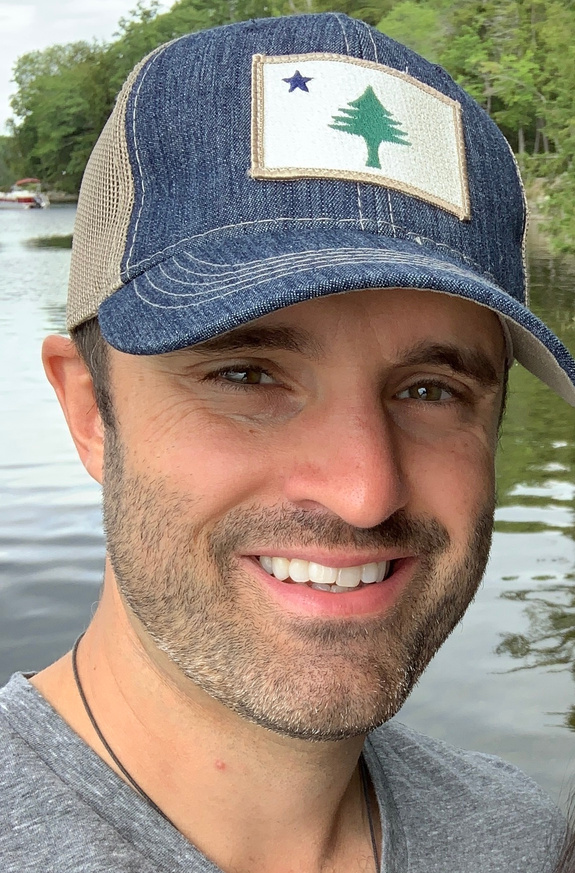 Nathan Hall
‘I experienced anxiety every day. Now it’s gone. Almost two years and I am now its master. So simple, so effective.’
 Frank Cav
‘I had a visceral experience that made me realise I didn’t have to have another panic attack. It just completely took their power away.’
 Keno Powers
‘I really feel like a better person than ever before. I feel like I can deal with anything.’
 Rodolfo Antunes Maranhão
Note: As with anything in life, results naturally vary. Every person and situation is unique. But automatic changes are the norm, which is why I can offer a no change, no pay guarantee.

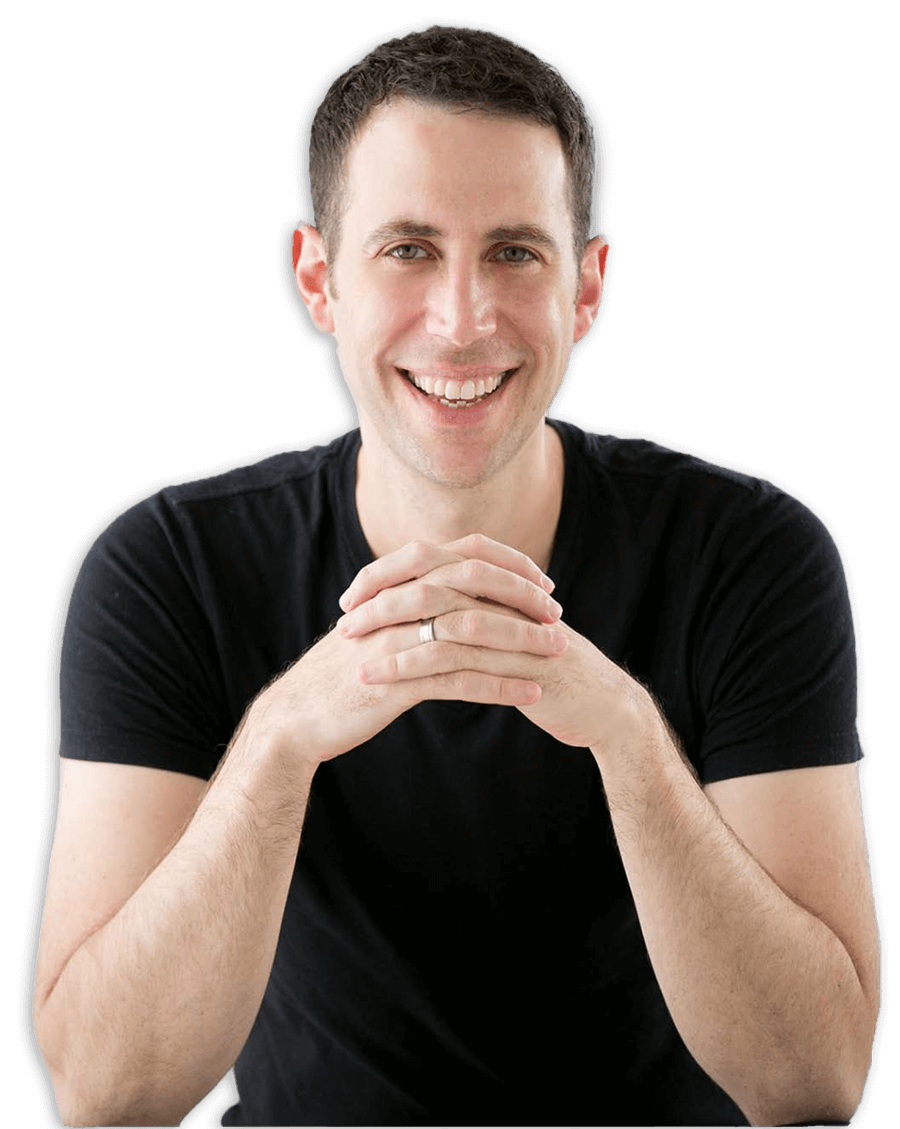
Hi, I’m Michael.
I help people change the automatic patterns that get in the way, so the way they want to be becomes second nature.
I’m a former research scientist, and over the last 25+ years I’ve helped clients from more than 103 countries.
I’ve worked with actors, musicians and elite athletes. And with parents, professionals and everyday people too.
I’m best known online for panic and anxiety, because I created Panic Free.
But one-on-one, I help people with all kinds of automatic patterns they’re tired of putting up with, from painful experiences that still affect them to how they react to the people closest to them.
I also help people who aren’t performing the way they know they can under pressure.
Maybe you just want to feel like yourself again. Or maybe life is going well, but there’s a fear, reaction or habit you can’t shake. Either way, I’d love to help.

‘Michael Norman is a rare example of great clinical skills, deep knowledge of the scientific literature…’
A case from my practice
One Example of Automatic Change in Action
Years ago, I worked with a woman who had been violently abducted and forced into a car.
From that day on, she rarely felt safe.
When she came to me, we worked together for two sessions.
In the first, the flashbacks, the hypervigilance and the constant feeling of threat almost completely went away.
But one cue hadn’t changed at all: the sound of a car door slamming still sent her into panic.
One of the things that made her feel most alive was music.
So in the second session, I asked her to imagine hearing her favourite, most upbeat, high-energy song in her mind’s ear.
As she was hearing it, feeling that energy and aliveness, I asked her to mentally replace the kick drum with the car door slamming sound, as if a music producer had seamlessly sampled it into the track.
Instead of it being part of an abduction, it became the drumbeat of her favourite song.
From that moment on, hearing a car door slam reminded her of that song and all the good feelings. It no longer sent her into panic.
And when I followed up with her a year later, she was still enjoying a normal life.
I invented the ‘music-car-door technique’ just for her, because she loved music and it fitted what she needed.
I’ve only used it a couple of times since, when it fitted other clients. There’s no one-size-fits-all protocol. Whatever we do is designed to fit you, and that’s one of the reasons it works so well.
And you don’t need to have been through anything this extreme. This is just an easy-to-share example of Automatic Change. It gives you a glimpse of how much more is possible when we work directly with the part of you that responds automatically.
‘Doctors couldn’t help me. You did. Such a unique way to help.’
For the curious
The Science Behind Automatic Change
Automatic Change isn’t a technique. It’s a different way of approaching change.
You don’t need to understand how your phone works to benefit from everything it can do. The same is true of Automatic Change.
But if you’re curious, here’s a glimpse into three ideas that help explain how it’s possible: two kinds of mental processing, predictive processing and neuroplasticity.
Two kinds of mental processing
Over a century of research helps us understand why effort alone so rarely changes an automatic response. One useful way to think about the mind is to distinguish between two kinds of mental processing, which we can call two ‘systems’.*
The Effortful System is slower and deliberate. It handles reasoning and analysis, consciously choosing how to respond, and trying to override automatic reactions.
The Automatic System is faster and effortless, and often works outside conscious awareness. It runs the learned reactions, habits and emotional responses that happen without you choosing them.
Willpower, coping techniques and insight mostly work through the Effortful System. But unwanted patterns run in the Automatic System. That’s why Automatic Change works with it directly.
* These systems are metaphorical. They are useful ways of describing different modes of processing, not literal brain structures. They overlap and interact, and these descriptions show general tendencies, not strict rules. William James’s early work on habit and attention (1890) was ahead of its time, and Daniel Kahneman popularised the two-system metaphor in Thinking, Fast and Slow (2011).
Predictive processing
Predictive processing is a scientific model of how expectations shape what we perceive, think, feel and do.
Your brain is constantly making automatic predictions about how the world works, what to expect and how to respond.
When you’re stuck in an unwanted pattern, it can help to think of it as your brain relying on outdated predictions. Like a GPS that keeps sending you the wrong way, it’s trying to serve you. It’s just using the wrong map.
One way to understand Automatic Change is as the result of updating these predictions. As a consequence, your brain and body can effortlessly respond the way you want, without you having to think about it.
Neuroplasticity
Neuroplasticity is your brain’s natural ability to ‘rewire’ itself (a shorthand for lasting changes in brain networks in response to experience).
When we create the right conditions, this ‘rewiring’ can be surprisingly fast, effortless and lasting, allowing desired patterns of feeling, thinking and responding to become automatic.

‘Michael Norman saved my livelihood.’
Your New Default
The goal of Automatic Change is simple: to make the way you want to be second nature. Imagine what that could mean in your everyday life.
- Instead of panicking, you’ll feel safe and relaxed, and you’ll be free to go wherever you want.
- Instead of worrying, your mind will be calm and clear, and you’ll enjoy the moment.
- Instead of reliving what happened, the emotional charge will be gone, and you’ll be present and at peace.
- Instead of tightening up under pressure, you’ll feel confident, capable and able to perform at your best.
- Instead of feeling you’re not good enough, you’ll feel good about who you are.
- Instead of putting off what you really want to do, you’ll find yourself naturally getting on with it.
- Instead of old reactions taking over, you’ll feel like yourself again.
And the wonderful thing?
It won’t take any effort to be the way you want. It will just happen automatically.
So instead of unwanted patterns getting in the way of what matters most to you, you’ll be free to get on with your life and enjoy it.
You’re not there yet with what you want to change. I’d love to help you.